

TRENDING
Got a question about the Type A Visa and not sure where to turn? Ask a Type A Visa attorney directly and get reliable answers fast. No guesswork or confusion. No matter where you are in the process, get professional guidance for your specific situation today.
To get a quick response from a licensed attorney, we request you to post your question in intricate detail
People use immigrationquestion.com to get guidance from licensed U.S. immigration attorneys. Getting help is simple.
Tell us about your situation. Share your question and any important details so attorneys can understand your case.
Licensed U.S. immigration attorneys on the platform review new questions and respond with guidance based on your situation.
Get your detailed answer. If you need more help, you can even connect directly with an attorney who may be able to take on your case.
.png&w=1200&q=75)
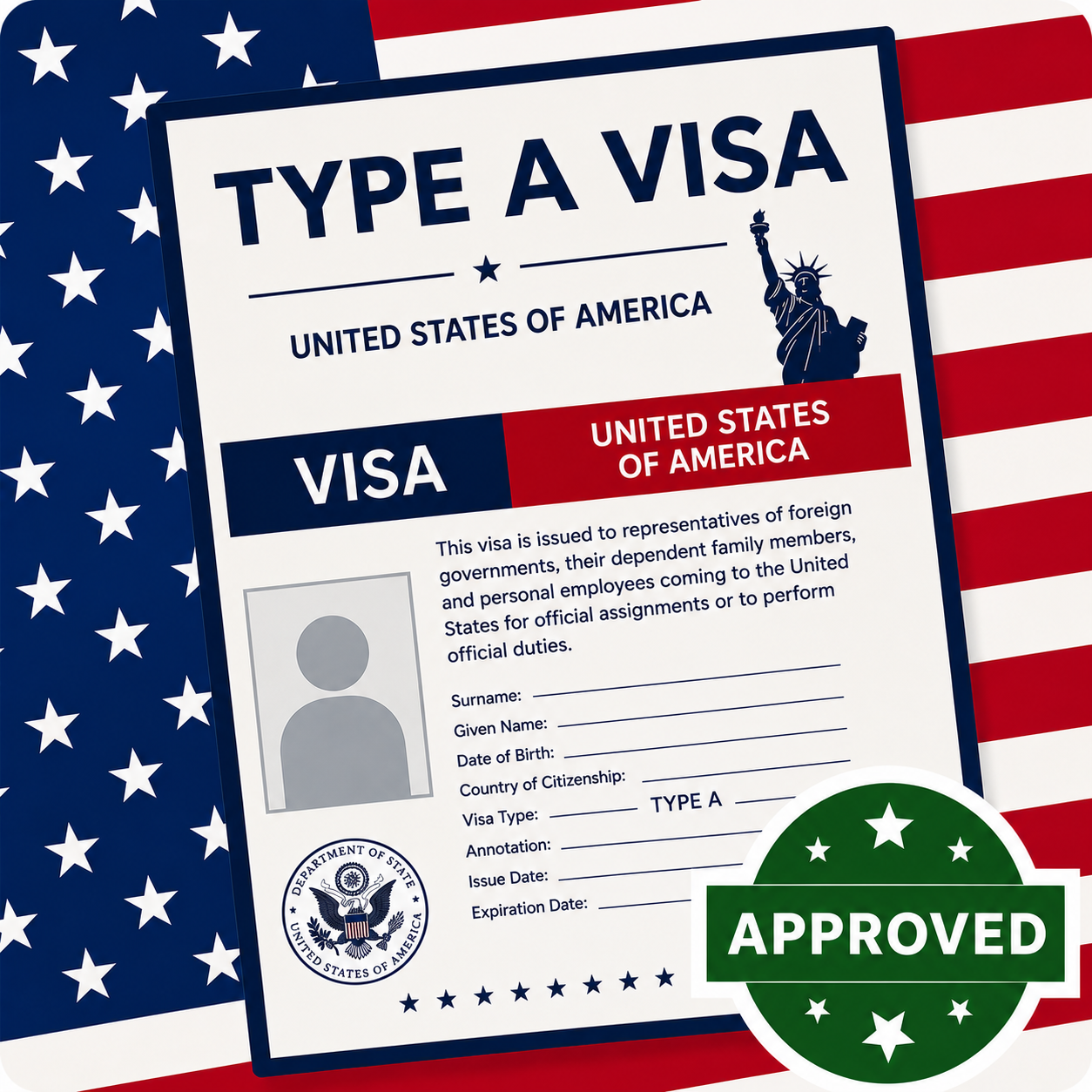
A Type A Visa is a nonimmigrant visa issued to foreign government officials traveling to the United States for official duties. It allows diplomats, ambassadors, and other government representatives to enter the U.S. on behalf of their country.
The Type A Visa is typically used for diplomatic missions, government meetings, or assignments at embassies and consulates. It is intended for high-level officials, their staff, and immediate family members. People apply for a Type A Visa when they are representing their government in an official capacity in the United States.

You can apply for a Type A Visa if you are a foreign government official or representative traveling to the United States for official duties.
You may qualify for a Type A Visa if your trip is directly connected to official government work or diplomatic responsibilities in the United States.
To qualify for a Type A Visa, applicants must meet specific eligibility criteria tied to their official government role and purpose of travel.
Submitting the correct documents for a Type A Visa is essential because it confirms your official role, purpose of travel, and eligibility for diplomatic entry into the United States.
Applying for a Type A Visa involves several structured steps, and careful preparation at each stage helps ensure a smooth approval process from start to finish.
Begin by obtaining formal approval and assignment from your home government confirming your diplomatic role and purpose for travel under the Type A Visa category.
Fill out the required visa application form accurately with personal, passport, and travel details, ensuring all information matches official government records.
Request a Note Verbale from your government confirming your status, assignment, and reason for travel related to the Type A Visa application.
Prepare all required documents, including passport, assignment letter, and photographs, ensuring everything clearly supports your eligibility for the Type A Visa.
Submit your completed application and supporting documents through the appropriate U.S. embassy or consulate handling Type A Visa diplomatic requests.
If requested, attend interviews or provide additional verification to confirm your identity, role, and purpose of travel under the Type A Visa.
Allow time for background checks and processing, as authorities review your eligibility and confirm approval for the Type A Visa issuance.
To get a quick response from a licensed attorney, we request you to post your question in intricate detail
.png&w=3840&q=75)
The processing time for a Type A Visa typically ranges from a few days to several weeks, depending on the applicant's situation and the workload of the U.S. embassy or consulate handling the case.
Several factors can influence how long a Type A Visa takes to process, including how complete and accurate the application is, the strength of supporting documents, and whether additional verification is required. Diplomatic cases are often prioritized, but background checks or missing information can still cause delays.
External factors such as embassy staffing, security reviews, and peak application periods may also affect timing. Because of this, no two Type A Visa applications follow exactly the same timeline, even when the circumstances appear similar.
The total cost of a Type A Visa is generally low for government filing fees, but overall expenses can vary widely depending on legal support and document preparation, typically ranging from a few hundred to several thousand dollars.
Government filing fees for a Type A Visa are usually minimal or waived due to its diplomatic nature, and are paid during application submission.
Legal or attorney fees may range from moderate to higher costs depending on case complexity and whether assistance is required.
Additional costs can include document translation, notarization, passport photos, and administrative preparation. In some cases, applicants may also incur travel expenses for embassy visits or supporting documentation.
Type A Visa applications can be denied for several reasons, most often linked to eligibility issues, incomplete documentation, or mistakes during the application process that raise concerns.
Missing or inaccurate documents can lead to immediate denial of a Type A Visa because officials cannot verify eligibility or purpose of travel clearly.
Without proper diplomatic approval or a valid Note Verbale, the Type A Visa application is usually rejected due to missing government confirmation.
If the applicant's reason for entering the U.S. is not clearly tied to official duties, the Type A Visa may be denied.
Applicants who do not meet diplomatic or government role requirements will be denied since the Type A Visa is strictly for official representatives.
Mistakes in personal details, passport numbers, or travel information can cause delays or denial of the Type A Visa application.
Unresolved security issues or failed background checks may result in denial due to strict diplomatic screening standards.
Conflicting details between documents and application forms can raise doubts and lead to rejection of the Type A Visa request.

Approval of a Type A Visa is an important milestone, but it does not end the process, as applicants must still complete a few final steps and follow specific responsibilities after issuance.
Once approved, the applicant receives official visa documentation that allows entry into the United States for authorized diplomatic duties under the Type A Visa. They may then travel, enter, or continue their assignment depending on their posting and timeline.
After arrival or approval, holders must strictly follow the conditions of the Type A Visa, including limiting activities to official government work and maintaining lawful status. The visa does not permit personal employment or unrelated activities, and compliance with diplomatic rules is required throughout the stay.

A Type A Visa denial does not always mean the process is over, as applicants may still have options depending on the reason for refusal and their specific circumstances.
After a denial, the applicant usually receives an official notice explaining why the Type A Visa was refused. This may relate to documentation issues, eligibility concerns, or missing government authorization. Understanding this reason is the first step in deciding what to do next.
In many cases, applicants may be able to correct errors, provide additional documentation, or reapply if circumstances change. In more complex situations, consulting a Type A Visa attorney can help determine whether a new application or alternative approach is appropriate.

A Type A Visa attorney consultation is most useful when you are unsure about eligibility, facing delays, or dealing with complex diplomatic documentation or approval issues that could affect your application outcome.
Instead of committing immediately, you can start by asking your question on ImmigrationQuestion.com and get guidance from experienced immigration attorneys. This gives you a clear, practical first step before deciding on a full Type A Visa attorney consultation.
Connect with licensed immigration attorneys who handle real immigration cases every day. Get reliable advice on immigration matters from professionals who understand the legal process.
Immigration law can be complicated. Our platform helps you get clear answers and practical guidance so you can better understand your legal options before deciding your next step.
Whether you are dealing with visas, work permits, citizenship, or immigration court matters, you can ask questions and receive guidance tailored to your specific immigration situation.
Speak with a Type A Visa attorney today for quick and clear guidance on your situation. Get answers from licensed immigration attorneys and take the next step with confidence and ease.
Subscribe to our newsletter to get the latest immigration news and insights delivered to your inbox.


10K + Attorneys and Immigrants Already Joined
Download the immigrationquestion.com app
Post your immigration question free
Download the immigrationquestion.com app
Post your immigration question free