

TRENDING
If you're trying to understand your F1 Visa or decide on your next move, an F1 Visa lawyer can point you in the right direction. Get straightforward answers without going in circles. Share your question, review your options, and take the next step with clarity.
To get a quick response from a licensed attorney, we request you to post your question in intricate detail
People use immigrationquestion.com to get guidance from licensed U.S. immigration attorneys. Getting help is simple.
Tell us about your situation. Share your question and any important details so attorneys can understand your case.
Licensed U.S. immigration attorneys on the platform review new questions and respond with guidance based on your situation.
Get your detailed answer. If you need more help, you can even connect directly with an attorney who may be able to take on your case.
.png&w=1200&q=75)
The F-1 visa is a non-immigrant document that allows you to live and study full-time at accredited U.S. colleges, universities, or language programs. To get one, you must be accepted by a school, receive an I-20 form, and prove you have enough money to cover your tuition and living costs.
People apply for an F1 Visa to gain access to structured academic programs in the U.S. It allows students to remain in the country legally while completing their studies and building knowledge in their chosen field.

Individuals accepted into a recognized U.S. academic institution can apply for an F1 Visa. This includes students planning to pursue structured educational programs. Eligible applicants include:
The F1 Visa is suitable for anyone aiming to study in the U.S. while maintaining lawful student status.
Provide the required documents to increase your eligibility and avoid delays or refusals. See below:
Below is the list of documents required for a stressless F1 visa application process:
Applying for an F1 Visa requires careful steps to ensure everything is submitted correctly.
Secure admission into a U.S. institution approved for international students and obtain your Form I-20.
Pay the SEVIS I-901 fee online and keep the receipt for your interview.
Fill out the DS-160 form carefully and print the confirmation page for your appointment.
Arrange your interview at a U.S. embassy or consulate and plan for availability.
Prepare Form I-20, passport, DS-160 confirmation, financial proof, and academic records.
Present your documents, respond clearly, and show your intention to complete your studies and return home.
After the interview, wait for a decision and follow the instructions for passport collection if approved.
To get a quick response from a licensed attorney, we request you to post your question in intricate detail
.png&w=3840&q=75)
F1 Visa processing can take several weeks to a few months, depending on location, demand, and application details.
Delays may happen when documents are incomplete or require verification. Submitting accurate and complete information helps keep things on track.
External factors, such as embassy workload or additional checks, may also affect the timing. Each application is reviewed individually, so timelines can vary.
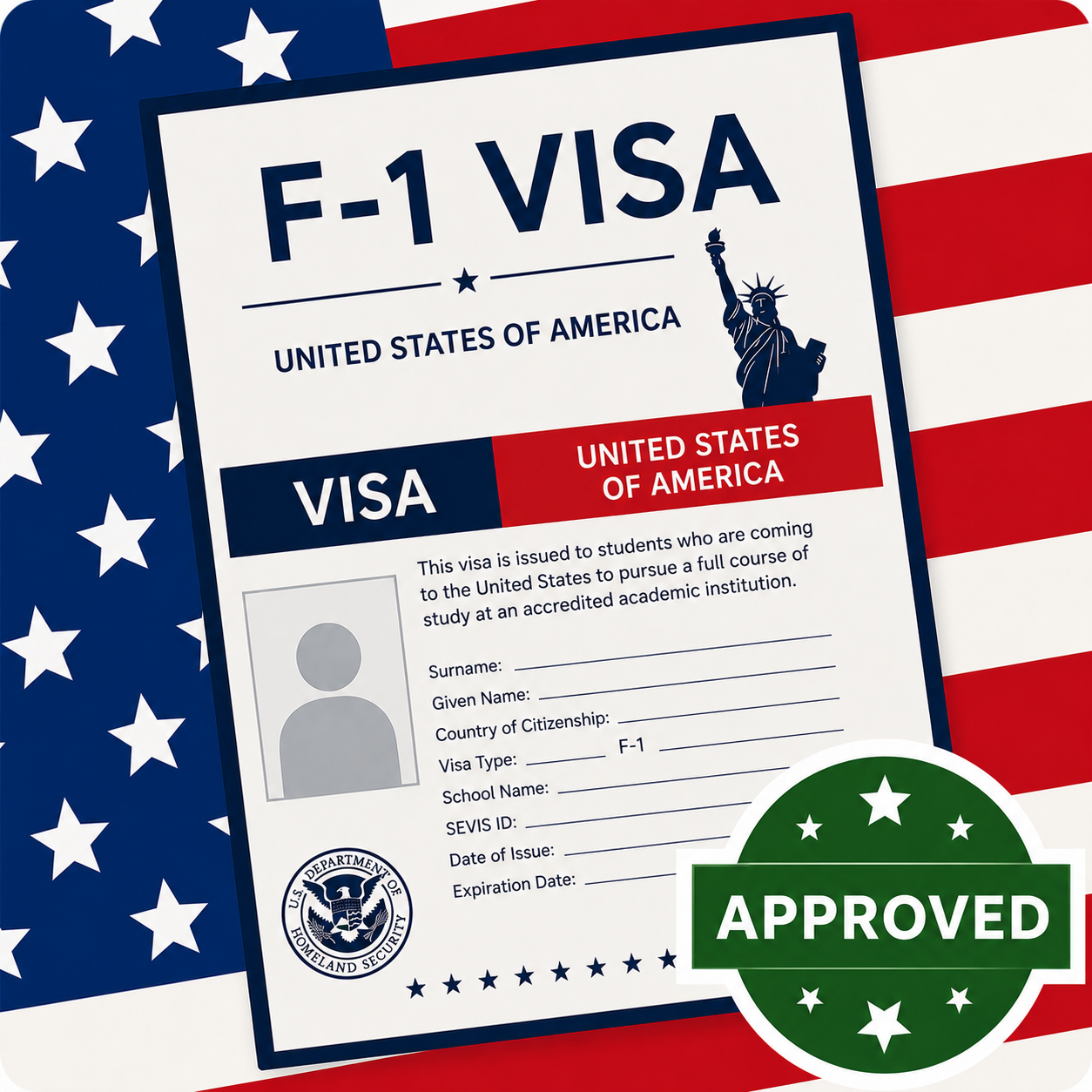
The overall cost depends on your school, location, and whether you choose to get guidance.
Government fees – Includes SEVIS I-901 and visa application fees, usually paid before the interview.
Attorney fees – Optional fees for an F1 Visa lawyer for guidance and application review.
Other expenses – May include document preparation, medical exams, photos, or travel, depending on your situation.
Denials often occur due to:
Missing or incorrect documents can lead to refusal. Ensure that all required materials are accurate and complete.
Failure to show enough funds can result in denial. Provide clear and verifiable financial documents.
Applicants must show plans to leave the U.S. after their studies are completed.
Mistakes on forms such as the DS-160 or I-20 can delay or prevent approval.

Getting F1 visa approval is a milestone, but you must still follow specific steps. First, verify that your stamped passport and Form I-20 are accurate. You may enter the U.S. up to thirty days before classes start to settle in. Upon arrival, keep your entry records safe as they confirm your legal status.
Maintaining your status requires full-time enrollment and steady academic progress. Your F1 visa allows you to live and study in America under strict conditions. You must limit on-campus work to 20 hours weekly and report address changes within 10 days. Staying compliant ensures your education continues without any legal interruptions.
If challenges arise, an F1 lawyer can help you navigate complex policy changes. While schools manage daily records, an F1 lawyer is vital for status violations or work authorization issues. Proactive management of your paperwork is the best way to enjoy your time abroad.

An F1 Visa denial does not always bring the process to an end, and applicants may still have options depending on their circumstances.
After a denial, you will receive a notice outlining the reason your F1 Visa was not approved. This explanation may point to missing documents, financial concerns, or questions about your eligibility. Reviewing this information closely is important to identify what needs to be improved or clarified.
Some applicants prepare a stronger application and reapply, while others seek guidance to better understand their situation. Taking time to address the issues increases your chances of a better outcome when you apply next.
An immigration lawyer is a great asset if you have questions, face a complicated situation, or need help understanding program rules. Professional guidance helps when your case is unclear, involves tricky details, or requires a better grasp of the requirements.
Start by asking your question on ImmigrationQuestion.com to get practical advice from licensed attorneys. They help clarify options before you commit to a full consultation.
Connect with licensed immigration attorneys who work on real cases every day. Get reliable advice from experts who know the legal process.
Immigration law can be complicated. Our platform gives you clear answers and practical advice, so you can understand your options before deciding what to do next.
If you are dealing with visas, work permits, citizenship, or immigration court matters, you can ask questions and receive guidance specific to your immigration situation.
Connect with a licensed F1 Visa lawyer today and get clear guidance. Ask your immigration questions easily on ImmigrationQuestion.com and get accurate and professional guidance.
Subscribe to our newsletter to get the latest immigration news and insights delivered to your inbox.


10K + Attorneys and Immigrants Already Joined
Download the immigrationquestion.com app
Post your immigration question free
Download the immigrationquestion.com app
Post your immigration question free