

TRENDING
Have a question about Adjustment of Status? Get direct answers from an Adjustment of Status Lawyer who understands your situation. Instead of guessing or waiting, ask your question and get clear, practical guidance on your Green Card process so you can move forward with confidence today.
To get a quick response from a licensed attorney, we request you to post your question in intricate detail
People use immigrationquestion.com to get guidance from licensed U.S. immigration attorneys. Getting help is simple.
Tell us about your situation. Share your question and any important details so attorneys can understand your case.
Licensed U.S. immigration attorneys on the platform review new questions and respond with guidance based on your situation.
Get your detailed answer. If you need more help, you can even connect directly with an attorney who may be able to take on your case.
.png&w=1200&q=75)
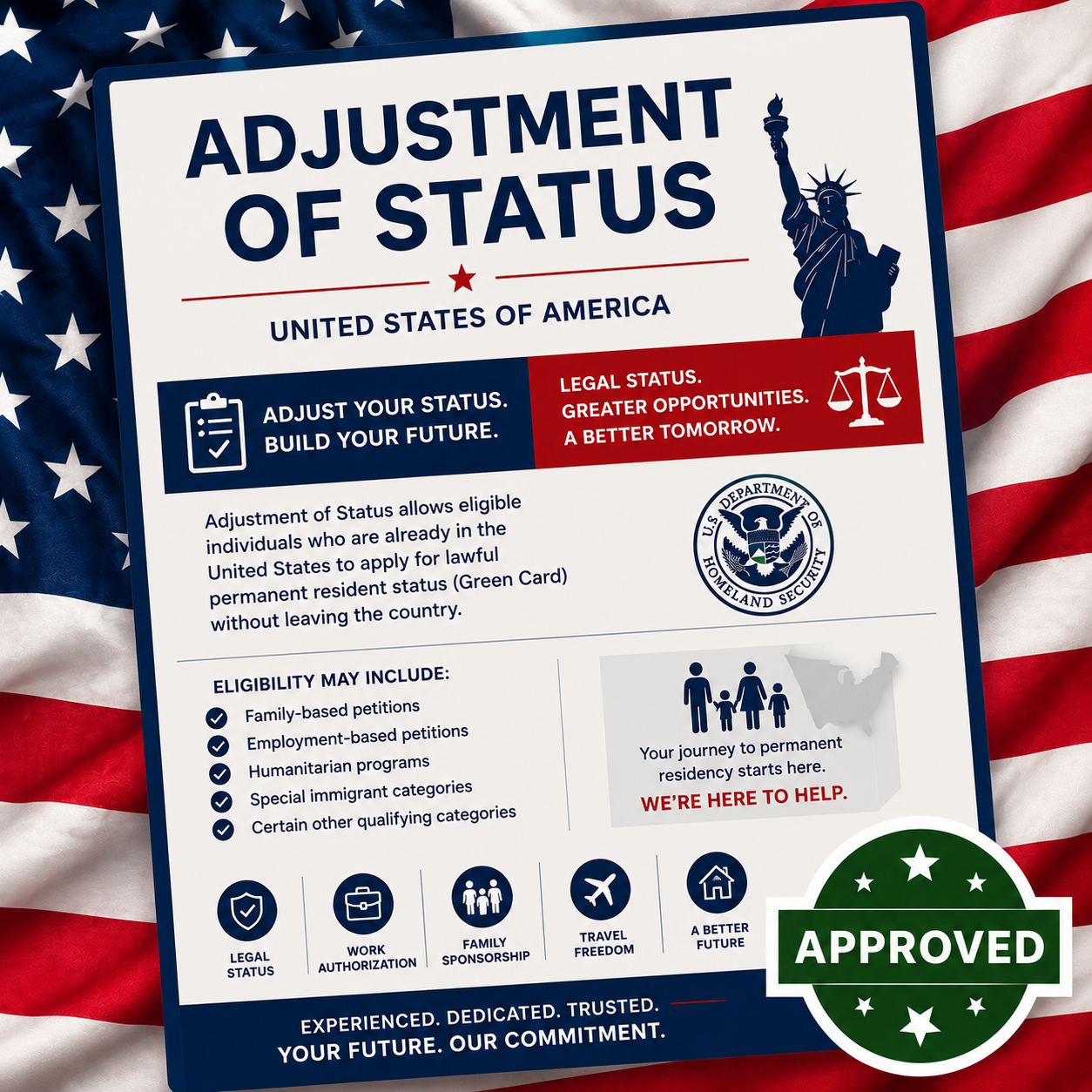
Adjustment of Status is the process that allows someone already in the United States to apply for lawful permanent residence (a Green Card) without leaving the country. Instead of going through consular processing abroad, Adjustment of Status lets eligible applicants complete everything from within the U.S.
This process is used by people who qualify through family sponsorship, employment, asylum, or other immigration categories and are physically present in the U.S. People typically apply after a visa petition is approved and a visa number is available. It is commonly used by spouses of U.S. citizens, workers on employment-based visas, and certain humanitarian applicants seeking to become permanent residents.

You can apply for Adjustment of Status if you are already in the United States and meet specific eligibility requirements based on how you qualify for a Green Card. Common situations where people qualify include:
To qualify for Adjustment of Status, applicants must meet several legal and procedural requirements set by U.S. immigration law. These rules determine whether you can apply from within the United States.
Submitting the correct documents is essential for a successful Adjustment of Status application, as missing or incorrect paperwork can delay or weaken your case.
Applying for Adjustment of Status involves several structured steps that must be completed carefully. Each stage builds on the previous one, so proper preparation helps avoid delays or application issues.
Before starting Adjustment of Status, verify you qualify based on your visa category, lawful entry, and availability of an immigrant visa number or approved petition.
Collect all supporting documents, including identity records, immigration history, medical exam, and financial support evidence needed for your Adjustment of Status application.
Submit Form I-485 to USCIS with all required documents and fees, ensuring every section is completed accurately to avoid processing delays or rejection.
After filing, USCIS schedules biometrics appointments to collect fingerprints, photos, and signatures for background checks during your Adjustment of Status process.
Visit a USCIS-approved doctor to complete Form I-693, confirming you meet the health requirements required for Adjustment of Status approval.
USCIS may schedule an interview to verify your eligibility, review documents, and confirm details provided in your Adjustment of Status application.
USCIS reviews your case and issues a decision. If approved, you become a lawful permanent resident through Adjustment of Status.
To get a quick response from a licensed attorney, we request you to post your question in intricate detail
.png&w=3840&q=75)
Adjustment of Status typically takes about 8 to 20 months, but the exact timeline can vary widely depending on your specific case and USCIS workload. Some cases may move faster, while others take longer.
Processing time can be affected by factors such as how complete and accurate your application is, how quickly you respond to USCIS requests, and whether additional evidence is required. Missing documents or errors often cause delays in Adjustment of Status cases.
External factors also play a role, including your local USCIS office, background-check timelines, visa-category demand, and overall government processing backlogs. Because of these differences, two applicants filing Adjustment of Status at the same time may receive decisions at very different speeds.
The total cost of Adjustment of Status usually ranges from about $1,500 to $5,000 or more, depending on whether you hire an Adjustment of Status Lawyer and the specifics of your case. Costs vary based on eligibility category, age, and additional requirements.
Government filing fees make up the largest portion and typically include Form I-485, biometrics, and related USCIS charges, usually paid when filing the application. Legal fees, if you use an Adjustment of Status Lawyer, vary widely depending on case complexity and services provided.
Additional costs may include medical exams (typically $200–$600), document translations, passport photos, and obtaining civil records. These are usually paid throughout the preparation phase before submission.
Adjustment of Status applications can be denied for several reasons, often linked to eligibility issues, missing documents, or mistakes in the filing process. Understanding these risks helps applicants avoid preventable errors.
Applicants are denied when they do not meet legal requirements, such as unlawful entry or lack of an approved immigrant petition.
Failure to submit required documents often leads to denial, as USCIS cannot verify eligibility for Adjustment of Status without full evidence.
Applications are denied if a visa number is not current, since Adjustment of Status cannot proceed without availability.
Mistakes or conflicting information on Form I-485 can cause doubt about credibility, leading to denial of Adjustment of Status.
Certain criminal records, fraud, or immigration violations may make applicants inadmissible and ineligible for approval.
Missing biometrics, interviews, or USCIS requests can result in automatic denial of the Adjustment of Status application.

Adjustment of Status approval is an important milestone, but it also comes with next steps and ongoing responsibilities. Once approved, you officially become a lawful permanent resident of the United States and receive documentation confirming your new status.
After approval, you will receive your Green Card, which serves as proof of your Adjustment of Status and allows you to live and work permanently in the U.S. You may also travel, however you must follow re-entry rules and maintain your residency obligations.
As a permanent resident, you must comply with U.S. laws and avoid actions that could jeopardize your status. You may also begin planning long-term steps such as renewing your Green Card or eventually applying for citizenship.

An Adjustment of Status denial does not necessarily end the process, as applicants may still have options depending on the reason for the denial. Understanding the denial is the first important step.
After a denial, USCIS will send a written notice explaining why the Adjustment of Status application was refused. This may relate to eligibility, missing documents, or other issues identified during review.
Once the reason is clear, applicants can evaluate possible next steps, such as reapplying, filing an appeal or motion to reopen in limited cases, or exploring other immigration pathways. Getting guidance from an Adjustment of Status Lawyer can help clarify the most appropriate option.

An Adjustment of Status Lawyer consultation is most useful when you are unsure about eligibility, have a complicated immigration history, face delays, or need help understanding your best path to a Green Card. It is also important to note that small mistakes could risk your entire Adjustment of Status application.
Instead of committing immediately to a full consultation, you can start by asking your question on ImmigrationQuestion.com and get guidance from licensed immigration attorneys. This helps you first understand your situation and decide on the next step with more clarity.
Connect with licensed immigration attorneys who handle real immigration cases every day. Get reliable advice on immigration matters from professionals who understand the legal process.
Immigration law can be complicated. Our platform helps you get clear answers and practical guidance so you can better understand your legal options before deciding your next step.
Whether you are dealing with visas, work permits, citizenship, or immigration court matters, you can ask questions and receive guidance tailored to your specific immigration situation.
Ask your Adjustment of Status question today and get clear guidance from licensed immigration attorneys ready to help you move forward with confidence.
Subscribe to our newsletter to get the latest immigration news and insights delivered to your inbox.


10K + Attorneys and Immigrants Already Joined
Download the immigrationquestion.com app
Post your immigration question free
Download the immigrationquestion.com app
Post your immigration question free