

TRENDING
If you're unsure about your M1 Student Visa or what to do next, an M1 Student Visa lawyer can help. Get clear answers quickly, without the hassle of searching on your own. Post your question, learn about your options, and move forward with confidence.
To get a quick response from a licensed attorney, we request you to post your question in intricate detail
People use immigrationquestion.com to get guidance from licensed U.S. immigration attorneys. Getting help is simple.
Tell us about your situation. Share your question and any important details so attorneys can understand your case.
Licensed U.S. immigration attorneys on the platform review new questions and respond with guidance based on your situation.
Get your detailed answer. If you need more help, you can even connect directly with an attorney who may be able to take on your case.
.png&w=1200&q=75)
An M1 Student Visa is a non-immigrant visa for people who want to study at vocational or technical schools in the United States. It's meant for students interested in hands-on, career-focused programs instead of traditional academic degrees.
People specifically apply for an M1 Student Visa to attend programs like technical training, vocational courses, or specialized schools. This visa is intended for students who need practical, skill-based education, and it is used when someone wants to legally study in the U.S. while focusing on a specific career path.

Anyone seeking vocational or technical training in the United States can apply for an M-1 Student Visa. It's meant for people interested in hands-on, career-oriented programs instead of traditional academic degrees. Typical applicants include:
This visa is a good choice for anyone who wants practical skills training in the U.S. and needs to keep a legal student status.
To get an M1 Student Visa, you must meet certain requirements set by U.S. immigration authorities. Meeting these rules makes you eligible for vocational or technical study programs.
Having the right documents is key to a successful M1 Student Visa application. They show you're eligible, support your intent to study, and help prevent delays or denials.
Applying for an M1 Student Visa involves several steps and requires careful preparation to ensure your application is complete, accurate, and in compliance with all U.S. immigration requirements. Follow these steps to stay organized and avoid delays.
Before you apply, get accepted to a U.S. vocational or technical school certified by SEVP. The school will issue you a Form I-20, which you need for your M-1 Student Visa.
After you get Form I-20, pay the SEVIS I-901 fee online. Keep the receipt because you'll need it for your visa interview.
Fill out the DS-160 non-immigrant visa form online. Check your information carefully and print the confirmation page for your interview.
Book an appointment at a U.S. embassy or consulate. Since wait times can vary, schedule early to avoid delays in your M1 Student Visa process.
Gather all the documents you need, like Form I-20, your passport, DS-160 confirmation, proof of finances, and academic records, to bring to your visa interview.
At your interview, bring all your documents, answer questions honestly, and show that you plan to study and return home after your M1 Student Visa program.
After the interview, wait for your M1 Student Visa decision. Once approved, follow the instructions for passport pickup or delivery to begin your U.S. studies.
To get a quick response from a licensed attorney, we request you to post your question in intricate detail
.png&w=3840&q=75)
Processing an M1 Student Visa usually takes anywhere from a few weeks to several months, depending on the U.S. embassy or consulate. The timeline can vary based on your location, the time of year, and the complexity of your case.
Delays can occur if your documents are incomplete or require additional information. Filling out forms correctly, providing financial proof, and submitting all required materials can help speed things up. Missing or incorrect documents can significantly lengthen the wait.
Other things, like government workload, holidays, or security checks, can also affect how long it takes. Remember, every M1 Student Visa application is different, so set realistic expectations for when you'll get approval and start your studies.
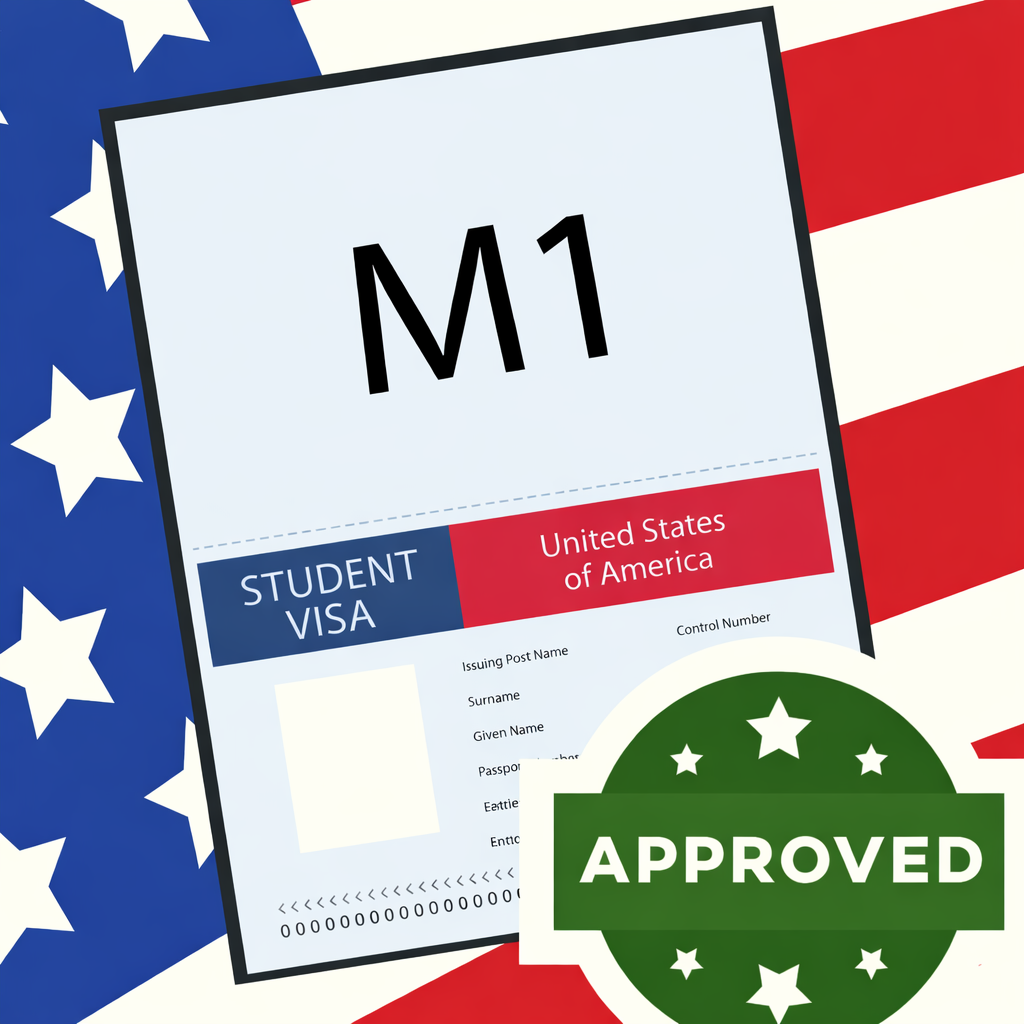
The total cost of getting an M1 Student Visa can vary, depending on your school, where you live, and if you use professional help.
Government Filing Fees – Includes the SEVIS I-901 fee and visa application fee, usually paid before the interview.
Legal or Attorney Fees – Optional fees for an M1 Student Visa lawyer, covering guidance, document review, and application support.
Additional Costs – May include document translations, preparation, medical exams, passport photos, and travel expenses. These vary by individual circumstances and are usually paid as needed throughout the application process.
M1 Student Visa applications can be denied for various reasons, often due to eligibility issues, missing documents, or errors in the application.
Missing or incorrect documents are a common reason for denial. Make sure all your forms, financial proof, and academic records are complete and accurate before you submit them.
If you don't prove that you have the financial capacity for tuition, living expenses, and travel, your application could be denied. It's important to provide clear financial proof.
You must show that you plan to return home after your M1 Student Visa program. If your intent isn't clear, your application could be refused.
Mistakes on forms like the DS-160 or I-20 can delay or stop your approval. Always double-check your information for accuracy and consistency.

Getting your M1 Student Visa approved is a big step, but there are a few steps you should follow afterward.
After approval, you'll receive your visa and can enter the United States to begin your vocational or technical program. Be sure to bring all your official documents, including Form I-20, for inspection when you arrive.
While in the U.S., you must maintain full-time enrollment, comply with all visa regulations, and report any changes to your school. The M1 Student Visa allows practical training, but you must comply with restrictions, including work limitations and the requirement to return home after completing your program.

A denial of an M1 Student Visa does not automatically end your ability to study in the United States. Applicants can review the decision, understand the reasons, and determine the best way forward.
Once your application is denied, you will receive an official notice detailing why the visa was not granted. This explanation provides clarity on issues such as missing documents, incomplete forms, or insufficient evidence of program eligibility. This helps you know what to avoid and what to do better the next time you apply.
After reviewing the notice, you can explore options such as addressing the identified issues, preparing a new application, or consulting with an M1 Student Visa lawyer.
Talking to an M1 Student Visa lawyer is helpful if you're unsure, have a complicated situation, or need to make important decisions about your vocational or technical study in the U.S. A lawyer can help you understand eligibility, document requirements, and any possible issues before you apply.
You don't have to book a full consultation right away. Start by asking your question and connecting with our licensed attorneys on ImmigrationQuestion.com. They'll give you clear guidance to help you understand your options and next steps. This is a practical way to begin before scheduling a full consultation.
Connect with licensed immigration attorneys who work on real cases every day. Get reliable advice from experts who know the legal process.
Immigration law can be complicated. Our platform gives you clear answers and practical advice, so you can understand your options before deciding what to do next.
If you are dealing with visas, work permits, citizenship, or immigration court matters, you can ask questions and receive guidance specific to your immigration situation.
Connect with a licensed M1 Student Visa lawyer today and get clear, reliable guidance. Ask your questions easily on ImmigrationQuestion.com and understand your options.
Subscribe to our newsletter to get the latest immigration news and insights delivered to your inbox.


10K + Attorneys and Immigrants Already Joined
Download the immigrationquestion.com app
Post your immigration question free
Download the immigrationquestion.com app
Post your immigration question free